

6 Membership Models Explained: How to Choose the Right One for Your Online Business
If you're thinking about starting a membership, one of the first decisions you'll need to make is what type of membership model you want to offer.
This decision affects more than just how your content is delivered. It influences how often members engage with your business, how much time you'll spend creating content, your pricing strategy, and even your long-term retention.
The good news is there isn't one "perfect" membership model. The best option depends on your expertise, the transformation you help people achieve, and how you want to run your business.
In this guide, you'll learn six popular membership models, the advantages of each, and how to decide which one fits your business.
What Is a Membership Model?
A membership model is the way you deliver ongoing value to paying members in exchange for a recurring subscription.
Some memberships provide instant access to a large content library. Others focus on coaching, community, or releasing new resources every month.
Choosing the right model helps you create an experience that keeps members engaged while fitting naturally into the way you prefer to work.
Comparison: The 6 Membership Models
| Membership Model | Best For | New Content Required | Community | Live Support |
|---|---|---|---|---|
| Content Library | Businesses with existing courses | Low | Optional | No |
| Community | Networking & Accountability | Medium | Yes | Optional |
| Drip Content | Structured Learning | Medium | Optional | No |
| Coaching | Experts & Consultants | Medium | Yes | Yes |
| Resource | Templates & Tools | Medium | Optional | Optional |
| Hybrid | Complete Experience | Flexible | Yes | Optional |
Let's look at each model in more detail.
1. Content Library Membership
A content library membership gives members immediate access to a collection of premium resources. This might include online courses, workshops, templates, videos, downloads, workbooks, or masterclasses.
Members pay a recurring subscription to access everything inside the library.
Best for
- Course creators
- Educators
- Digital product creators
- Businesses with an extensive content library
Advantages
- Highly scalable
- Strong perceived value
- Little pressure to create new content every week
- Easy for members to find resources when they need them
Things to Consider
If members consume everything quickly and don't see ongoing value, cancellations can increase. Many businesses reduce this by adding live sessions, office hours, or a community.
2. Community Membership
A community membership focuses on bringing people together.
Instead of joining only for educational content, members join because they want accountability, networking, discussion, and support from people working towards similar goals.
Communities may include discussion forums, private groups, networking sessions, challenges, or live events.
Best for
- Coaches
- Business owners
- Industry experts
- Niche communities
Advantages
- High member engagement
- Strong sense of belonging
- Members often stay because of the relationships they build
- Less reliance on creating large amounts of content
Things to Consider
Communities require moderation and regular interaction. Members expect conversations to stay active, so you'll need systems to encourage participation.
3. Drip Content Membership
A drip membership releases content gradually instead of giving members access to everything immediately.
For example, a new lesson may become available every week or each month.
This approach keeps members focused and prevents information overload.
Best for
- Online courses
- Certification programs
- Educational memberships
- Step-by-step learning experiences
Advantages
- Creates anticipation
- Improves course completion rates
- Keeps members engaged over time
- Makes content creation easier if you're releasing lessons as you build them
Things to Consider
Some members prefer immediate access to everything. Be clear about how your content will be released before they join.
4. Coaching Membership
A coaching membership combines recurring income with direct access to your expertise.
Members don't just receive content—they receive guidance, feedback, and support.
Depending on your offer, this may include:
- Monthly coaching calls
- Group Q&A sessions
- Live workshops
- Office hours
- Accountability check-ins
Best for
- Business coaches
- Health coaches
- Consultants
- Mentors
- Experts with a proven framework
Advantages
- Higher perceived value
- Easier to charge premium pricing
- Strong member relationships
- Excellent retention when members achieve results
Things to Consider
Because your time is involved, this model is less scalable than a content-only membership. Make sure your pricing reflects the level of support you provide.
5. Resource Membership
A resource membership delivers new tools, templates, swipe files, prompts, checklists, or other practical resources on a regular schedule.
Instead of creating large courses, you consistently release smaller pieces of highly useful content.
For example, you might deliver:
- Canva templates
- Marketing resources
- Email templates
- AI prompts
- Social media content
- Planning worksheets
Members stay because they're continually receiving fresh, practical resources they can immediately use.
Best for
- Designers
- Marketers
- Copywriters
- Digital creators
- Service providers
Advantages
- Easier content creation schedule
- Continuous reasons for members to stay
- Highly practical value
- Great recurring revenue model
Things to Consider
Consistency matters. Members expect new resources on the schedule you've promised.
6. Hybrid Membership
A hybrid membership combines multiple membership models into one offer.
For example, members might receive:
- A content library
- A private community
- Monthly coaching
- New templates every month
- Live workshops
- Accountability challenges
Many successful memberships eventually evolve into a hybrid model because it creates multiple reasons for members to continue paying each month.
Best for
- Established businesses
- Coaches with growing audiences
- Businesses expanding beyond courses
- Brands looking to increase retention
Advantages
- Appeals to different learning styles
- Higher perceived value
- Better member retention
- Multiple ways to engage members
Things to Consider
Hybrid memberships can become overwhelming if everything feels disconnected. Make sure each element supports the same overall transformation.
How to Choose the Right Membership Model
If you're still unsure which membership model fits your business, start by asking yourself these questions.
Do you already have lots of content?
A content library membership may be your best choice if you already have courses, workshops, or digital products that can be organised into one place.
Do your members benefit from connecting with each other?
A community membership works well when networking, accountability, or peer support is part of the transformation.
Does your expertise require personal guidance?
If members need your feedback or coaching to succeed, a coaching membership may create the best experience.
Are you planning to release content gradually?
A drip membership is ideal for structured learning where members should complete lessons in order.
Do you prefer creating one useful resource each month?
A resource membership allows you to build your library over time without needing dozens of courses before launching.
Do you want to offer a complete experience?
A hybrid membership gives members content, community, and support in one place. Many businesses eventually move towards this model as they grow.
Frequently Asked Questions
Which membership model is the easiest to start?
A resource membership or coaching membership is often the easiest because you don't need a large content library before launching.
Which membership model has the best retention?
There isn't one universal answer, but memberships that combine valuable content with community and ongoing engagement often retain members longer than content-only libraries.
Can I combine different membership models?
Yes. Many successful memberships begin with one simple model and gradually evolve into a hybrid membership as the business grows.
Do I need new content every month?
Not necessarily. Some memberships rely on an extensive content library, while others focus on community or coaching instead of constantly creating new lessons.
Final Thoughts
The best membership model isn't necessarily the one with the most features. It's the one that consistently delivers value while being sustainable for you to run.
Start with the model that matches your expertise and available time. As your membership grows, you can always add new features, community elements, coaching, or additional resources.
Remember, members don't stay because you have the biggest library. They stay because your membership helps them make progress toward their goals.
Build a Membership Sales Page That Converts
Once you've decided on your membership model, the next step is convincing people to join.
A well-designed sales page explains the value of your membership, answers common objections, and guides visitors toward becoming paying members.
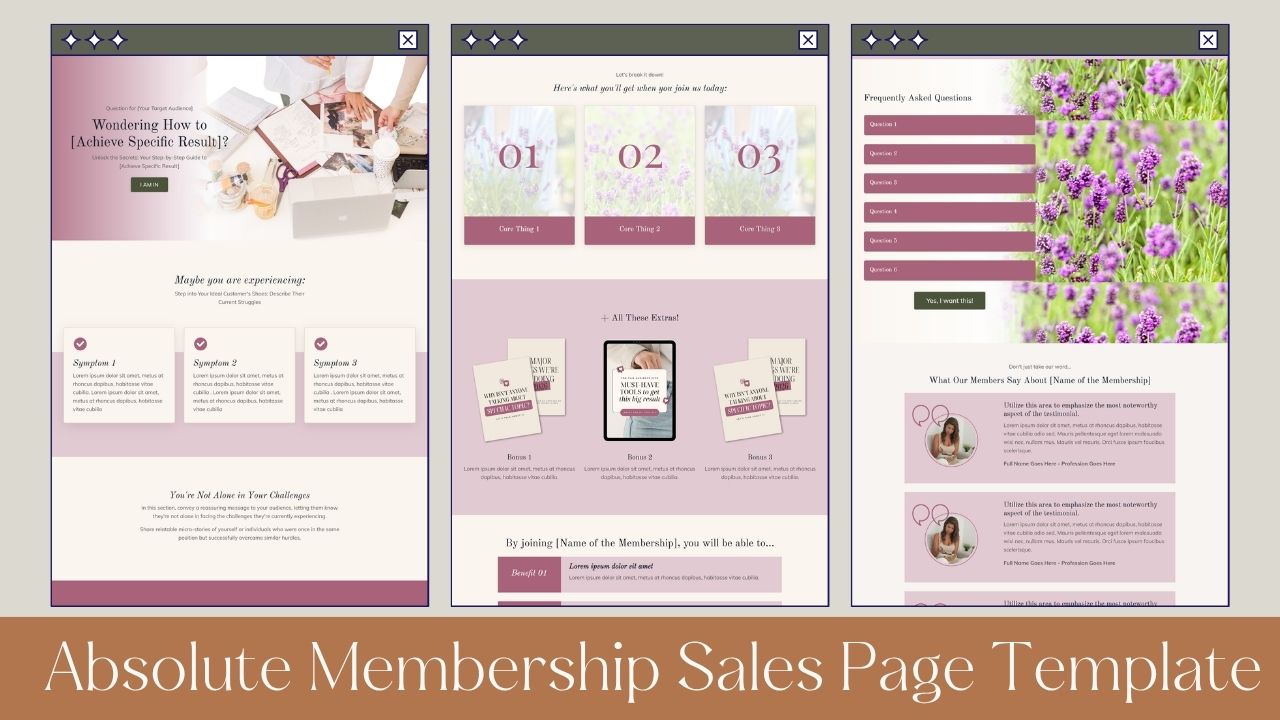
If you're using Kajabi, my Kajabi Membership Sales Page Template gives you a proven structure designed specifically for memberships. Instead of wondering what sections to include or how to organise your page, you'll have a professionally designed template that you can customise with your own branding, messaging, and offer—helping you launch faster and with more confidence.
Other blog posts you may like:
- Online Course vs. Membership Site: Which One is Best for You?
- The Guide to Front-End and Back-End Memberships
- 3 Key Elements of a Membership Sales Page Needs
- Course Sales Page vs. Membership Course Sales Page: Key Differences
- Benefits of a Membership Business Model
- 6 Must-Have Sections for a High-Converting Membership Sales Page


