

The Ultimate Guide to Front-End and Back-End Memberships for Online Businesses
What Is a Membership?
An online membership is a paid or free program where members receive ongoing access to content, resources, support, community, or other benefits.
Unlike a one-time course, a membership gives people a reason to keep coming back. Depending on the offer, members might receive new lessons each month, downloadable resources, live calls, coaching, community access, expert support, or a growing resource library.
The exact format can vary widely. For example, a membership might give members:
- New educational content each month
- A library of courses, templates, or resources
- Live Q&A or coaching calls
- Community access
- Feedback or personalized support
- Exclusive workshops or events
- Ongoing updates and new resources
The important distinction is that a membership is built around an ongoing relationship rather than a single transaction.
That makes memberships particularly valuable for online businesses that want to create recurring revenue while continuing to serve their customers beyond an initial purchase.
But not every membership needs to play the same role in your business. That's where front-end and back-end memberships come in.
What Is a Front-End Membership?
A front-end membership is an entry-level offer designed to attract new customers and give them an easy way to experience your content, expertise, or community.
It usually sits near the beginning of your customer journey. The goal isn't necessarily to provide everything you offer. Instead, it gives people enough value to see what it's like to learn from or work with you.
Front-end memberships are often offered at a lower price than a creator's more advanced programs. Some may even be free, although a paid membership can work particularly well as a low-cost entry point.
Think of it as a first step into your ecosystem.
Key Features of a Front-End Membership
Accessible Price Point: Front-end memberships are generally priced to make the decision to join relatively easy for someone who is unfamiliar with your business. The price should still reflect the value of the offer, but it doesn't need to require a significant financial commitment.
Entry-Level Content: The content is usually focused on foundational knowledge, practical resources, or quick wins. Members get useful results without necessarily receiving the depth of support included in your higher-tier offers.
A Way to Experience Your Expertise: A front-end membership allows potential customers to experience your teaching style, approach, content, and community before making a larger investment.
A Path to Other Offers: A front-end membership can naturally lead members toward other products or services in your business. Once someone has joined, received value, and built trust in your brand, they may be more open to your higher-priced offers.
Benefits of a Front-End Membership for Online Business Owners
Attract New Customers: A lower-cost membership can give people a more accessible way to become customers instead of asking them to make a large investment immediately.
Build a Community: Bringing people together around a shared interest can create a community of people who are already interested in your area of expertise.
Build Trust Through Ongoing Value: Instead of trying to convince someone to make a large purchase from the start, you can demonstrate your expertise by consistently providing useful content and support.
Create Opportunities for Future Sales: Members who engage with your front-end offer may eventually be ready for a course, coaching program, premium membership, or another higher-value offer.
Learn More About Your Audience: A membership also gives you an opportunity to learn what your audience actually needs. Questions, feedback, participation, and engagement can help you identify topics, challenges, and gaps that could inform future offers.
Is a Front-End Membership the Same as a Lead Magnet?
Not exactly.
A lead magnet is typically free and designed to turn a visitor into a lead, usually by collecting their email address.
A front-end membership can serve a similar acquisition purpose, but it is usually a paid offer. Instead of simply collecting a lead, you're turning someone into a paying customer while giving them an opportunity to experience your brand.
This makes a front-end membership particularly useful when you want to build a relationship with customers before introducing them to your higher-priced offers.
What Is a Back-End Membership?
A back-end membership is an ongoing offer designed for customers who already know your work and are ready for deeper learning, continued support, or more personalized help.
Rather than being the first step into your business, a back-end membership usually comes after another purchase or experience.
For example, someone might first purchase your online course. After completing the course, they could join a membership where they receive monthly coaching, new implementation sessions, advanced resources, and ongoing access to you or your team.
The purpose is to continue helping customers after their initial purchase while creating a recurring revenue stream for your business.
A back-end membership can therefore become an important part of the customer journey:
Key Features of a Back-End Membership
Higher-Value Offer: Back-end memberships typically provide more value than an entry-level membership. This might come through advanced content, personalized feedback, coaching, live calls, or access to a more experienced community.
Designed for Existing Customers: The people joining a back-end membership usually already have some familiarity with your work. They may have purchased a course, attended a program, worked with you, or been part of another offer.
Ongoing Support: Instead of simply giving members access to a library of content, the membership may provide continued guidance as members apply what they've learned.
Advanced Content and Resources: Members may receive deeper training, advanced strategies, new resources, implementation support, or content that builds on an earlier program.
Stronger Relationship With the Creator: Because back-end memberships often include more interaction, members may have greater access to the creator, coach, instructor, or their team.
Benefits of a Back-End Membership for Online Business Owners
Create Recurring Revenue: A back-end membership gives existing customers a reason to continue investing in your business after their initial purchase.
Increase Customer Lifetime Value: Instead of making a single sale and ending the relationship, you can continue serving customers through an ongoing offer.
Improve Customer Retention: When members continue receiving useful support, resources, and opportunities to make progress, they have a stronger reason to remain part of your business.
Create Deeper Customer Relationships: Back-end memberships often allow for more interaction with members. This can strengthen trust and create a stronger sense of community.
Provide a Natural Next Step: A back-end membership can give customers somewhere to go after completing a course or program. Rather than wondering what they should do next, they have an ongoing way to continue learning and getting support.
Is a Back-End Membership Always More Expensive?
Not necessarily.
A back-end membership can have a higher price because it may include more support, access, personalization, or advanced content. But price alone doesn't determine whether a membership is front-end or back-end.
The more important distinction is where the membership sits in your customer journey and who it is designed to serve.
A $49/month membership could be a back-end offer if it is specifically designed for existing course students who want ongoing support. Similarly, a $199/month membership could be a front-end offer if it is the first paid step into someone's ecosystem.
So when deciding whether an offer is front-end or back-end, don't look at price in isolation. Look at the audience, purpose, level of support, and role the membership plays in your overall business model.
Front-End vs. Back-End Memberships: Key Differences
Now that we've looked at each type of membership separately, let's compare them side by side.
The biggest difference isn't simply the price. Front-end and back-end memberships serve different purposes in the customer journey.
| Front-End Membership | Back-End Membership | |
|---|---|---|
| Primary purpose | Attract and convert new customers | Continue serving existing customers |
| Audience | New or less familiar customers | Existing customers and engaged members |
| Typical position | Earlier in the customer journey | Later in the customer journey |
| Content | Foundational and accessible | Advanced and ongoing |
| Support | Usually more limited | Often more personalized |
| Price | Often lower | Can be higher, depending on the value |
| Main business goal | Customer acquisition and relationship building | Retention and increased customer lifetime value |
1. Pricing Strategy
Front-End: Usually priced to make joining relatively easy for someone who hasn't purchased from you before.
Back-End: Can command a higher price when it includes advanced content, coaching, feedback, personalized support, or greater access to the creator.
2. Target Audience
Front-End: Designed primarily for people who are new to your business or haven't made a significant investment in your offers yet.
Back-End: Designed for people who already know your work and want to continue learning, implementing, or receiving support.
3. Value Proposition
Front-End: The value proposition is often centered around accessibility, foundational knowledge, practical resources, and quick wins.
Back-End: The value proposition is usually centered around continued progress, deeper expertise, personalized support, and ongoing access to resources or community.
4. Level of Support
Front-End: Support tends to be more scalable. Members might have access to a resource library, community discussions, group sessions, or pre-recorded content.
Back-End: Support is often more hands-on. Depending on the offer, this could include live coaching, feedback, office hours, implementation sessions, or direct access to the creator or their team.
5. Role in Your Business
Front-End: The goal is to bring more people into your ecosystem and turn them into customers.
Back-End: The goal is to continue serving customers who have already experienced your work while increasing retention and customer lifetime value.
The Simple Way to Think About It
If you're still unsure about the difference, ask yourself:
"Is this membership designed to bring someone into my world, or to keep serving someone who is already in it?"
If it's designed to bring new customers in, it's likely a front-end membership.
If it's designed to provide ongoing value to existing customers, it's likely a back-end membership.
And your business doesn't necessarily have to choose one or the other. You can use both.
Can You Have Both a Front-End and Back-End Membership?
Yes. In fact, having both can create a clear path for people to move through your offers as their needs change.
You don't need to build both memberships, but the two models can work well together when they have clearly different purposes.
For example, your customer journey could look like this:
Each step gives the customer a different reason to continue working with you.
How This Could Work
Imagine you're a business coach.
Your front-end membership might cost $29/month and include:
- Monthly training
- Templates and worksheets
- A private community
- Basic implementation support
Someone joins because they want to learn more about growing their business without making a large investment.
After spending several months in the membership, they decide they want a more structured transformation and purchase your $1,500 business program.
Once they complete that program, they may want continued support. That's where your back-end membership could come in. It might include:
- Advanced monthly training
- Live coaching calls
- Feedback on their work
- Implementation sessions
- A community of other established business owners
The back-end membership gives them a reason to stay connected to your business after completing the program.
Do You Need Both?
No. Trying to create multiple memberships simply because you can isn't necessarily a good business strategy.
A single membership can be enough if it clearly serves your audience and delivers ongoing value.
Consider a front-end membership if your priority is attracting new customers and giving them an accessible way to experience your expertise.
Consider a back-end membership if you already have a customer base and want to continue supporting them after they complete another offer.
The right model depends on your audience, your existing offers, the level of support you want to provide, and the role you want the membership to play in your business.
Which Membership Model Is Right for Your Online Business?
There isn't one membership model that works for every online business. The right choice depends on where your business is today and what you want the membership to accomplish.
Here are a few questions to help you decide.
Choose a Front-End Membership If You Want to:
- Attract new customers with a lower-cost offer
- Give your audience an easy way to experience your expertise
- Build a community around your content
- Create a recurring revenue stream from newer customers
- Create a pathway into your courses, coaching, or other higher-priced offers
A front-end membership can be particularly useful if you have an audience but haven't yet created a clear entry-level paid offer.
Choose a Back-End Membership If You Want to:
- Continue serving customers after they complete a course or program
- Provide ongoing coaching, support, or accountability
- Increase customer lifetime value
- Create a recurring revenue stream from existing customers
- Give customers a natural next step after completing another offer
A back-end membership can be especially valuable when you already have successful courses, programs, or services and want to continue supporting the people who have purchased them.
What If You Already Have a Membership?
If you already have a membership, you don't necessarily need to create another one.
Instead, look at who your membership is designed for and where it fits in your customer journey.
Ask yourself:
- Is this the first paid offer most people see from me?
- Are my members mostly new customers or existing customers?
- What problem does the membership solve?
- What happens before someone joins?
- What should a member do or buy after completing the experience?
- Does the level of support match the price I'm charging?
The answers can help you determine whether your existing membership is functioning more like a front-end or back-end offer — and whether you actually need to change anything.
The Best Membership Is the One That Has a Clear Purpose
The biggest mistake isn't choosing the "wrong" type of membership.
Whether your membership is front-end or back-end, members need a clear reason to join and an ongoing reason to stay.
Once you've defined that, your pricing, content, support, and sales page become much easier to build around.
Frequently Asked Questions About Front-End and Back-End Memberships
What is a front-end membership?
A front-end membership is an entry-level membership designed to attract new customers and introduce them to your content, expertise, or community. It is often lower-priced and typically provides foundational content, resources, or community access.
What is a back-end membership?
A back-end membership is an ongoing offer designed primarily for existing customers. It usually provides continued learning, advanced content, coaching, feedback, accountability, or other forms of ongoing support.
What is the difference between a front-end and back-end membership?
The main difference is their role in the customer journey. A front-end membership is generally designed to bring new customers into your business, while a back-end membership is designed to continue serving customers who already know and trust your work.
Is a front-end membership always cheaper than a back-end membership?
No. While front-end memberships are often lower-priced, price isn't what determines whether a membership is front-end or back-end. The audience, purpose, level of support, and position in your customer journey are more important factors.
Can a membership be both front-end and back-end?
Yes. A membership can serve different roles depending on how you structure your business. For example, you might allow new customers to join your membership directly while also using it as an ongoing offer for customers who have completed one of your courses. However, if the needs of these two audiences are very different, separate offers may provide a better experience.
Do I need both a front-end and back-end membership?
No. Many online businesses can build a successful membership around one clear offer. If you are starting from scratch, it is usually better to create one strong membership with a clear purpose rather than trying to build multiple memberships at once. You can always introduce another offer later when you have a clearer understanding of what your audience needs.
How do I decide what to include in a membership?
Start with the outcome you want to help members achieve. Then determine what content, resources, community, or support they need to make progress toward that outcome. Avoid adding content simply to make the membership look bigger. A membership doesn't need an enormous content library to be valuable. It needs to consistently help members move forward.
How do I sell a membership?
Your sales page should clearly explain who the membership is for, what members receive, what they can expect to achieve, and why the ongoing membership is worth the investment. For recurring offers, it's particularly important to communicate why someone should continue their membership month after month, rather than focusing only on what they receive when they first join.
Create a Membership Sales Page That Clearly Communicates Your Offer
Once you've decided what type of membership you're creating, the next step is making sure potential members understand why they should join.
A good membership sales page needs to do more than list what's included. It should communicate the transformation, explain how the membership works, show what members can expect, and make the value of ongoing membership clear.
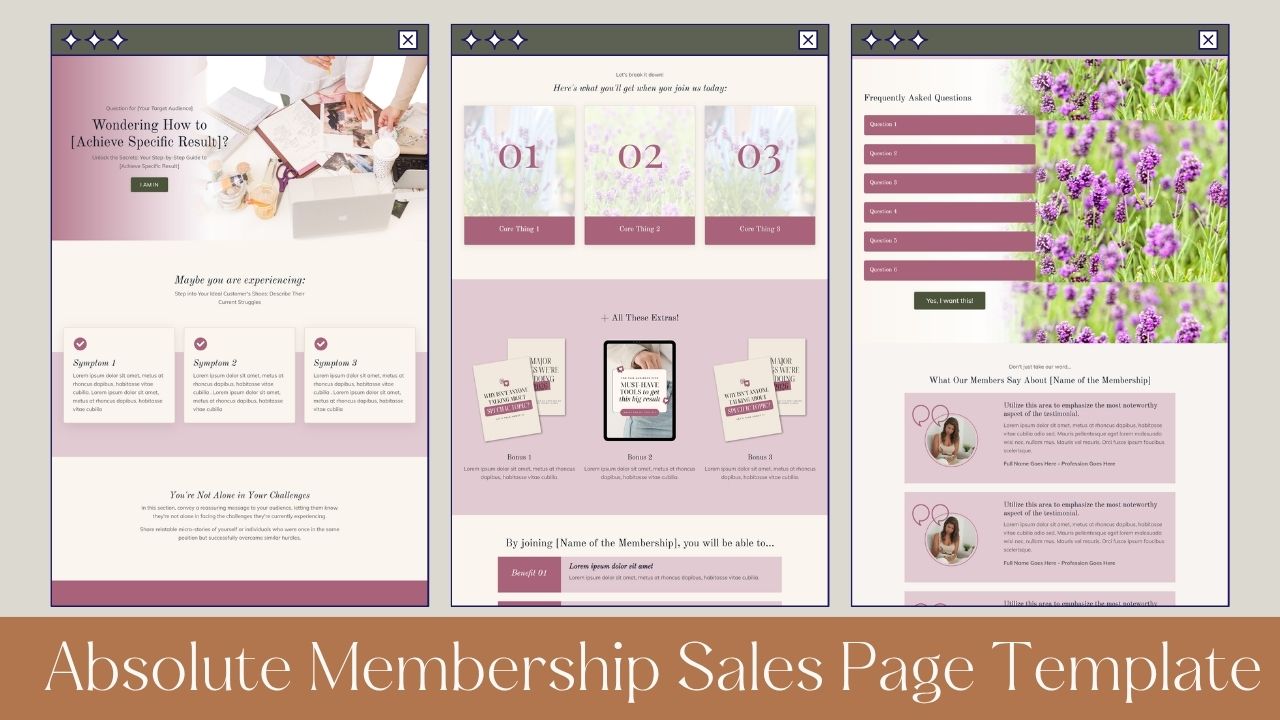
If you're building your membership in Kajabi, you can use a sales page designed specifically around the needs of a membership offer.
Our Kajabi Membership Sales Page Template gives you a conversion-focused structure you can customize for your own membership and brand.
Whether you're creating a front-end membership to attract new customers or a back-end membership to continue serving existing customers, your sales page should make the decision to join feel clear and straightforward.
Explore the Kajabi Membership Sales Page Template
Looking for more sales page options? Explore all Kajabi sales page templates.
Other blog posts you may like:
- Course Sales Page vs. Membership Course Sales Page: Key Differences
- 3 Key Elements of a Membership Sales Page Needs
- Online Course vs. Membership Site: Which One is Best for You?
- Benefits of a Membership Business Model
- Types of Membership Models Explained
- 6 Must-Have Sections for a High-Converting Membership Sales Page


